Apple faces high-profile legal challenges around the world that target the way the company operates. Antitrust authorities both at home and abroad seem hell-bent on forcing Apple to pry open its ecosystem, a “walled garden” of hardware, software and services that the bureaucrats say locks in customers and drives Apple’s enormous profits.
In the United States, the Justice Department and more than a dozen states sued Apple on March 21, 2024, for an alleged “iPhone monopoly.” While the DOJ’s case appears weak, it’s yet another ominous sign for Cupertino. Apple, which vowed to fight the lawsuit, likely faces years of legal wrangling, hefty fines and, perhaps most disturbing, distraction from its core pursuits.
Read Cult of Mac’s latest posts on Apple legal battles:
Apple can’t undo some recent modifications to the App Store ordered by a judge. Photo: Cult of Mac
A U.S. appeals court on Wednesday shot down Apple’s request to put a hold on a recent judge’s order that opens the App Store to more financial competition.
Apple already made the changes after being ordered to by the federal judge in April, but asked that they be put on hold during the appeal process. A federal appeals court denied the request.
The EU's Digital Markets Act causes plenty of headaches for Apple. Photo: European Commission
Apple officially filed an appeal against the European Union’s Digital Markets Act interoperability requirements Friday. That’s no big surprise, and neither is the reason why. Apple argues the regulations pose significant privacy and security risks to iPhone users, while also stifling innovation.
Apple submitted its challenge to the EU’s General Court in Luxembourg, targeting the commission’s March decision that requires Apple to make iOS more compatible with rival products, including smartwatches, headphones and VR headsets.
The long, long wait ends. Fortnite is back in the App Store. Image: Epic Games/Cult of Mac
Fortnite can once again be installed on iPhones and iPads in the United States, developer Epic Games announced triumphantly on Tuesday. The very popular game is back in the U.S. App Store.
The change comes almost five years after Apple banned the battle royale game in a spat with Epic over in-app payments.
Epic Games’ hope to get Fortnite reinstated on the U.S. iPhone App Store crashed and burned. Apple used a letter from one of its lawyers to deny the attempt to let iPhone users in the United States install and play the popular game. This is the latest clash in a long-running dispute between the two companies.
Epic claimed Friday that Apple had also blocked Fortnite in Europe, which Apple denies.
The iPhone App Store won’t be quite the same. Photo: Ed Hardy/Cult of Mac
Apple changed its App Store rules late Thursday to allow third-party iPhone application developers to steer customers toward their own websites to make purchases. The move comes after a years-long delay in complying with a court order.
The alteration in the rules should result in many iPhone apps allowing customers to pay for services and subscriptions without giving Apple a cut. Streaming music service Spotify became one of the first to take advantage of this major change to the App Store. The modification gives customers more buying options, and the hope is that this will save them money.
Spotify is putting the heat on Apple. Photo: Cult of Mac
Spotify submitted a major app update to the App Store with several significant changes Thursday. The company moved quickly to capitalize on a judge’s Wednesday ruling that requires Apple to allow external payment links in apps effective immediately.
Update: Apple quickly approved Spotify’s update. The company formally changed its App Store rules Thursday to bring them into “compliance with a United States court decision regarding buttons, external links, and other calls to action in apps.”
Apple plans to challenge the ruling, which forces major changes on the company’s handling of the App Store.
During a conference call with Wall Street analysts Thursday, Apple CEO Tim Cook said the company strongly disagrees with the judge’s ruling. “We’ve complied with the court’s order, and we’re going to appeal,” he said.
Judge's ruling will force Apple to make big changes to the App Store. Photo: Brett Jordan
In a major blow to Cupertino, a judge ruled Wednesday that Apple “willfully chose not to comply” with a 2021 injunction that required the company to let developers include in-app links directing users to third-party payment options on the web.
“Apple’s continued attempts to interfere with competition will not be tolerated,” said U.S. District Judge Yvonne Gonzalez Rogers in the ruling.
She also found clear evidence that an Apple executive lied under oath in his court testimony, and asked U.S. attorneys to investigate whether Apple’s vice president of finance should be charged with criminal contempt of court.
The EU wants Apple to make it easier for iPhone users to install applications outside the App Store. AI image: Grok
The system Apple set up to enable EU residents to load apps onto their iPhones outside the App Store violates the Digital Markets Act, according to a decision handed down Wednesday by the European Commission. It cites “overly strict eligibility requirements” and Apple’s new Core Technology Fee as reasons.
It’s a preliminary decision, but if Apple doesn’t make the app sideloading process easier, the DMA gives the European Commission the right to hit the iPhone maker with hefty fines.
Apple is in hot water with the EU over the Digital Markets Act again. Photo: Sora Shimazaki/Pexels CC
The European Union socked Apple with a fine of 500 million euros ($570 million) Wednesday for breaking antisteering rules in the Digital Markets Act. It also fined Meta 200 million euros for DMA violations.
The two companies face further fines if they don’t make the changes the EU demands.
Would an iPad by any other name smell as sweet? Photo: Apple
March 26, 2010: Apple pays up to settle a trademark dispute with Japanese multinational Fujitsu over the name “iPad” in the United States.
It comes two months after Apple CEO Steve Jobs first showed off the iPad, and around a week before the tablet will land in stores. As it happens, it’s not the first time Apple battled over the name for one of its new products.
The European Union just ordered Apple to make iPhone cooperate better with headphones and smartwatches made by other companies. AI image: Midjourney/Cult of Mac
The European Commission issued “guidance” Tuesday on changes it says Apple must make to comply with the interoperability requirements of the EU’s Digital Markets Act. The new mandates would open up the iPhone to work more closely with third-party smartwatches, headphones and TVs.
Apple says the new rules will undercut user privacy and slow innovation, and vows to make its case to the EU. It remains to be seen whether the changes will take effect only in Europe or globally.
The Macintosh 7100 was not Carl Sagan's favorite computer. Photo: Matt Gibson/Flickr CC
March 14, 1994: Apple introduces the Power Macintosh 7100, a midrange Mac that will become memorable for two reasons.
The first is that it is among the first Macs to use new PowerPC processors. The second is that it results in Apple getting taken to court by astronomer Carl Sagan — not once but twice.
The U.S. director of national intelligence won’t let the UK force Apple make an anti-privacy move. Image: Apple
Tulsi Gabbard, the new U.S. director of national intelligence (DNI), said a demand from the UK government that Apple build a backdoor to access the contents of encrypted iCloud files worldwide constitutes “a clear and egregious violation of Americans’ privacy.”
She then indicated that the UK would not be allowed to spy on Americans in this way.
Sorry UK, your iCloud files are getting less secure. Image: Apple/Cult of mac
Apple moved toward deactivating its Advanced Data Protection iCloud privacy-protection feature for iCloud in the United Kingdom. The move is a stopgap measure instead of giving the UK government what it demanded: a “backdoor” way to break the encryption offered by the feature so it could secretly surveil its citizens. This decision also raises concerns about iCloud deals and the implications for user privacy. Read more about the issuehere.
The problem is, this move won’t fully satisfy the UK government, who wants to be able to spy on the iCloud accounts of any Apple user in any country.
The UK wants to be able to spy on your iCloud files. Image: Cult of Mac
The government of the United Kingdom reportedly wants a backdoor into Apple accounts so it can spy on any iPhone or Mac user anywhere. It allegedly ordered Apple to allow it to access everything from any iCloud account globally, breaking the encryption protection on the files.
Complaints say Siri inadvertently recorded comments when unintentionally activated. Photo: D. Griffin Jones/Cult of Mac
Apple agreed to a $95 million settlement in a class action lawsuit alleging privacy violations by its Siri voice assistant, according to a new report. The lawsuit, filed in Oakland, California federal court, claims that Apple’s virtual assistant recorded users’ private conversations without consent and shared this information with advertisers.
So, should a federal judge approve the settlement, millions of Apple device users could see small payouts (most likely less than $20 per device, given the vast number of devices running Siri).
Cupertino's battle with a rumor site splits Apple fans. Image: Ste Smith/Cult of Mac
December 19, 2007: Apple settles a lawsuit with reporter Nick Ciarelli, resulting in the shuttering of Think Secret, his masssively popular Apple rumors website. Writing under the screen name Nick de Plume, the Harvard University student broke a number of Apple stories on the site, raising Cupertino’s ire.
The terms of Ciarelli’s settlement with Apple remain secret. In a statement, he says he will “be able to move forward with my college studies and broader journalistic pursuits.”
AirDrop and AirPlay are now in the EU’s sights. Image: Apple
AirDrop and AirPlay are the latest Apple technologies the European Union wants to make more interoperable. This would give third-party developers, including rival handset makers, access to the tech.
But Apple is pushing back hard. Apple has made the jaw-dropping claim that opening up AirDrop and AirPlay would allow companies like Meta (which owns Facebook, Instagram and WhatsApp) to read all your emails, messages, photos and even passwords!
Apple will soon take iPhone SE and iPhone 14 off the shelves in the EU. Photo: Unsplash
Apple will reportedly stop selling the iPhone SE (3rd gen) and iPhone 14 in the EU by the end of this year. It will do this to comply with the EU’s directive, which mandates all smartphones to use USB-C for charging.
Apple only switched to USB-C on its smartphone lineup with the iPhone 15’s launch in 2023.
The U.K. government seems poised to force Apple to fundamentally change the way iPhone browsers work. Image: Ed Hardy/Cult of Mac
The United Kingdom could precipitate a significant iPhone revamp after a government report found that “Apple’s rules restrict other competitors from being able to deliver new, innovative features that could benefit consumers.”
The findings in the report are sure to inform government regulators as they enforce the U.K.’s Digital Markets, Competition and Consumers Act, which goes into effect in January 2025.
The never-ending battle between Apple and Samsung takes another turn. Photo: Killian Bell/Cult of Mac
November 13, 2013: Apple and Samsung head back to court to determine how much the Korean company must pay for having copied the iPhone. Cupertino asks Samsung for $379 million in damages for ripping off key iPhone technical and design features.
Apple arrives at that number based on estimated lost profits, royalty rates and the $3.5 billion worth of copyright-infringing devices Samsung sold during the period in question.
Apple versus The Beatles is one of the less-likely feuds in Apple history. Image: Apple Corps.
October 9, 1991: A court orders Apple to pay $26.5 million to Apple Corps, The Beatles’ record label and holding company, for trademark infringement. The end of this Beatles versus Apple lawsuit marks the second time Cupertino is forced to pay the English rock band.
The ruling comes a decade after Apple swore it would never get into the music business.
How will a major court ruling against Google Play affect Apple? Image: Google/Apple
A U.S. federal judge ordered sweeping changes to Google Play, the default source for Android applications. Rival Android software marketplaces will get a big boost as a result.
While the iPhone App Store is similar, Apple’s and Google’s situations are different enough that iPhone users shouldn’t expect similar changes anytime soon. Long term? That’s a different story.
Apple might be required to make iPhone cooperate better with VR headsets and other accessories made by other companies. Photo: Oculus
The European Commission intends to require iPhone and iPad to be more open to working with third-party smartwatches, headphones, virtual reality headsets, and other accessories. On Thursday, the EC began proceedings to “specify how Apple will provide effective interoperability with functionalities such as notifications, device pairing, and connectivity.”
Apple devices already work with a broad variety of accessories, but the company also says it has to balance connectivity with protecting user privacy. For the latest updates on Apple’s compliance and upcoming changes, check out the latest iPhone news.


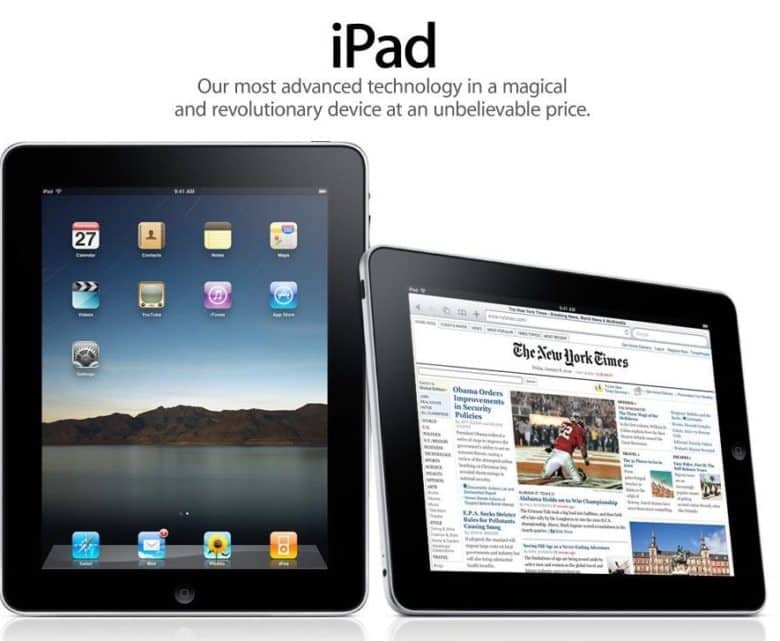
 March 26, 2010: Apple pays up to settle a trademark dispute with Japanese multinational Fujitsu over the name “iPad” in the United States.

 March 14, 1994: Apple introduces the Power Macintosh 7100, a midrange Mac that will become memorable for two reasons.


 December 19, 2007: Apple settles a lawsuit with reporter Nick Ciarelli, resulting in the shuttering of Think Secret, his masssively popular Apple rumors website. Writing under the screen name Nick de Plume, the Harvard University student broke a number of Apple stories on the site, raising Cupertino’s ire.


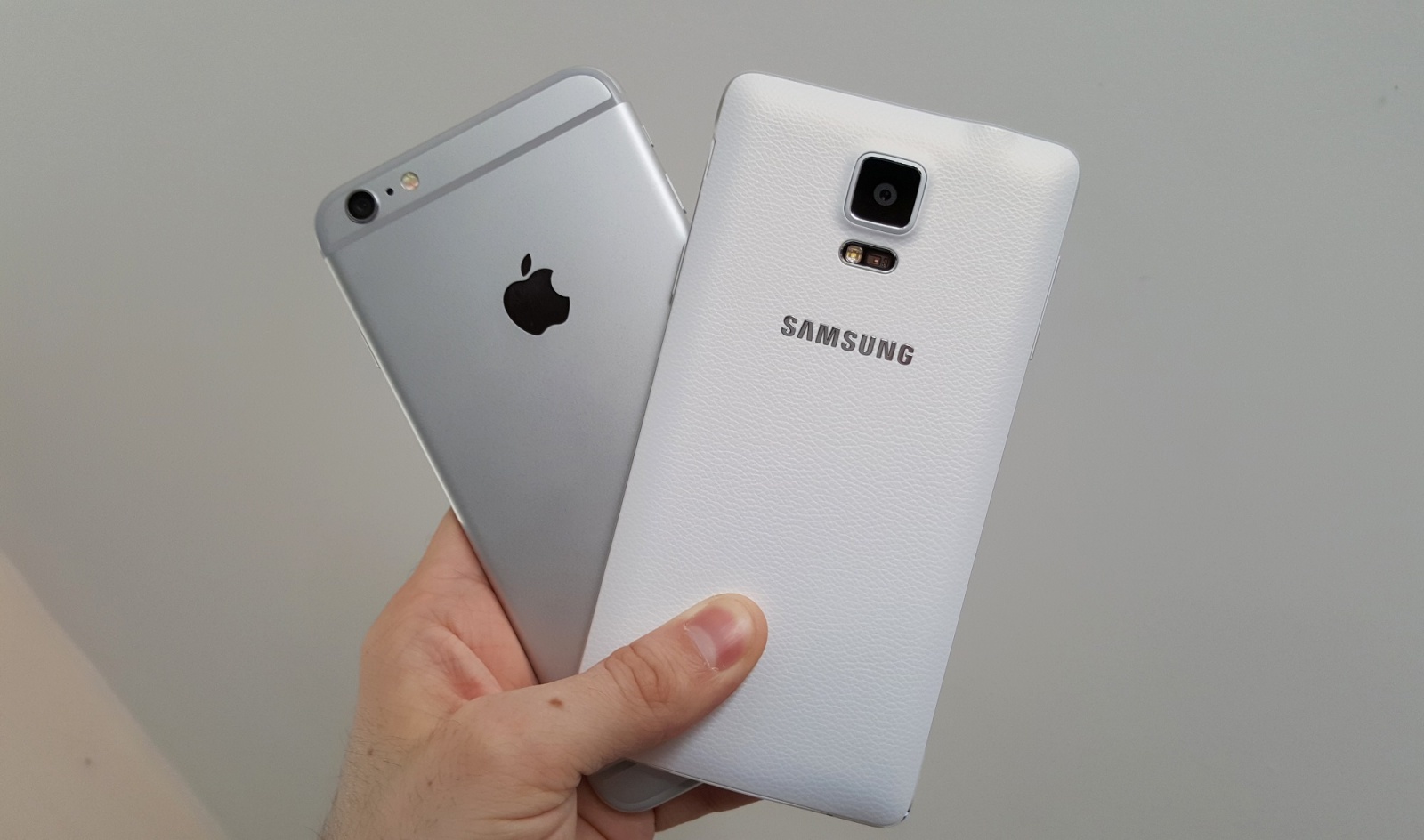
 November 13, 2013: Apple and Samsung head back to court to determine how much the Korean company must pay for having copied the iPhone. Cupertino asks Samsung for $379 million in damages for ripping off key iPhone technical and design features.
 October 9, 1991: A court orders Apple to pay $26.5 million to Apple Corps, The Beatles’ record label and holding company, for trademark infringement. The end of this Beatles versus Apple lawsuit marks the second time Cupertino is forced to pay the English rock band.
